Professional designer and manufacture of CCD machines for ONE STOP SOLUTION.
Language
Professional designer and manufacture of CCD machines for ONE STOP SOLUTION.
How does the color of the silk screen affect the plate making?
The wire mesh is available in white, yellow, amber, red, etc. The color of the screen has a great influence on the quality of the plate making. Colored screen, such as: yellow, red, amber screen, can prevent the diffusion of light when printing, while the use of white screen printing will cause obvious diffusion. This is because the photosensitive material has a large absorption peak in the ultraviolet region, and since the white screen reflects white light when the light source is irradiated, it has an impact on the photosensitive material.
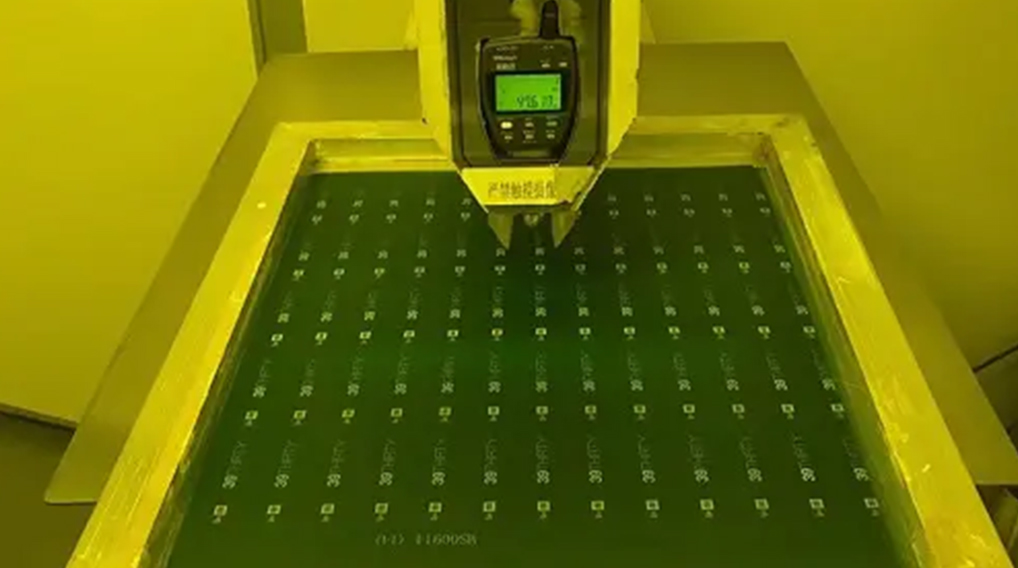
The irradiated light reaches the emulsion coating through the transparent part of the positive film, and when the irradiated light touches the white screen, reflection, refraction-reflection, and diffuse reflection occur, causing the printing plate to appear floating, that is, vignetting. If you use a colored wire mesh, this phenomenon will be prevented because the colored wire mesh can absorb a part of the irradiated light, thereby reducing the reflection intensity of the irradiated light, and the colored wire mesh reflects the color light, which is inactive The material does not have an effect, especially when printing fine prints, the color of the screen is particularly important.
What is the relationship between the mesh number and the dots?
The number of screen meshes and the dots only constitute a certain relationship when copying the original with continuous tuning. If the continuous tone color original is reproduced by screen printing technology, if the continuous tone photographic negative is directly used to make a screen printing plate and printed, a copy of the same continuous tone as the original cannot be obtained. Because the screen printing plate has only two states, that is, the mesh in the graphic part is open, and the mesh in the non-graphic part is closed and closed. And because the size and arrangement rules of the screen meshes of one specification are unified, the amount of ink passing through the screen meshes during printing is basically equal, so that the level changes of the original text cannot be represented. In order to make the changes of the depth and light level of the original pattern fully reflected on the screen printing plate, the continuous tone original should be made into a dot negative. That is, the changes in the depth of the manuscript are represented by dots of different sizes and uniform density. On the screen printing plate, the dots with high density have a large area, the dots with low density have a small area, and the dots with the same density have the same area. The center distance between the dots is equal, and they are regularly arranged at a certain angle. Using this kind of dot film to make a screen printing plate and print it, a continuous tone copy can be obtained. The density of dot arrangement is usually expressed by the number of screen lines. The unit representation is: line/inch or line/cm, which means the number of dots arranged in the unit length.
What is the process of stretching the net?
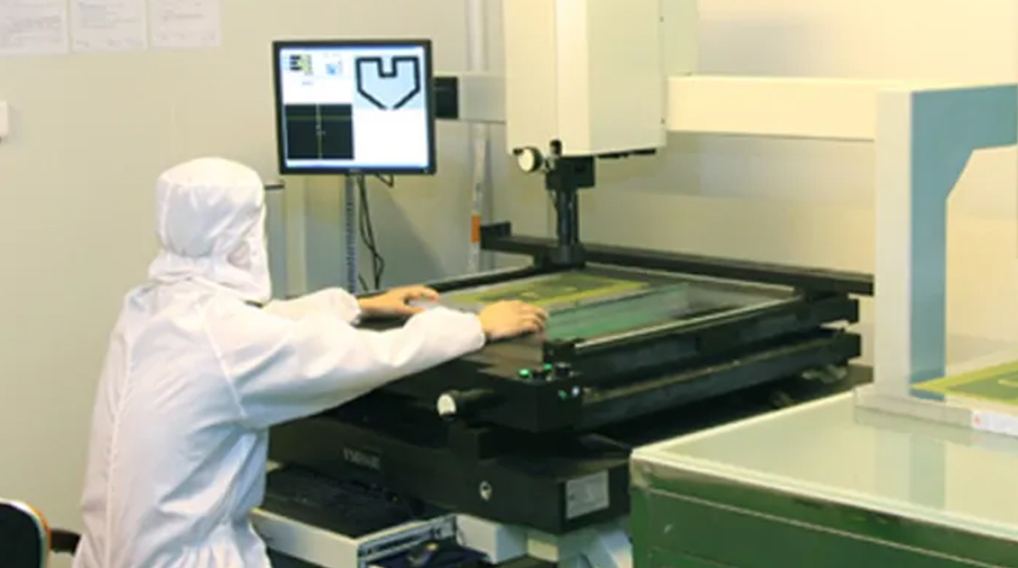
Stretching the mesh is the first process of making a screen printing plate. Stretching quality has a direct relationship with the quality of plate making. Therefore, it is necessary to carefully and carefully do the preparatory work before stretching the net and the work of stretching the net. First, select the corresponding screen frame according to the printing size, and clean the side where the screen frame is bonded to the screen. In this way, it is easy to improve the adhesion between the screen frame and the screen. If the screen frame is used, it should be cleaned with sandpaper to remove the residual glue and other substances. Before stretching the screen, the cleaned frame is pre-applied with adhesive on the surface in contact with the screen and air-dried. When stretching the mesh, manually or mechanically stretch the mesh. After the mesh is stretched, the mesh is tightly attached to the mesh frame, and the mesh is in contact with the mesh frame. Partially coat the adhesive again, and then blow it dry. Note that the adhesive should not be applied too thickly or too thinly. When blowing dry, you can use a rubber sheet or a soft cloth to wipe the adhesive part while applying a certain pressure. Make the screen and the screen frame more firmly bonded. After the adhesive is dry, loosen the external tension, cut the wire mesh around the outside of the screen frame, and then stick the single-sided self-adhesive tape on the bonding part of the wire mesh and the screen frame, which can protect the wire mesh. The function of the screen and the screen frame can also prevent the solvent or water from dissolving the adhesive during printing, so as to ensure the effective use of the screen printing plate. Finally, rinse the screen with water or cleaning agent, and after the screen is dry, it can be used for photosensitive adhesive coating (plate making).
There are several ways to stretch the net? What are the characteristics of each?
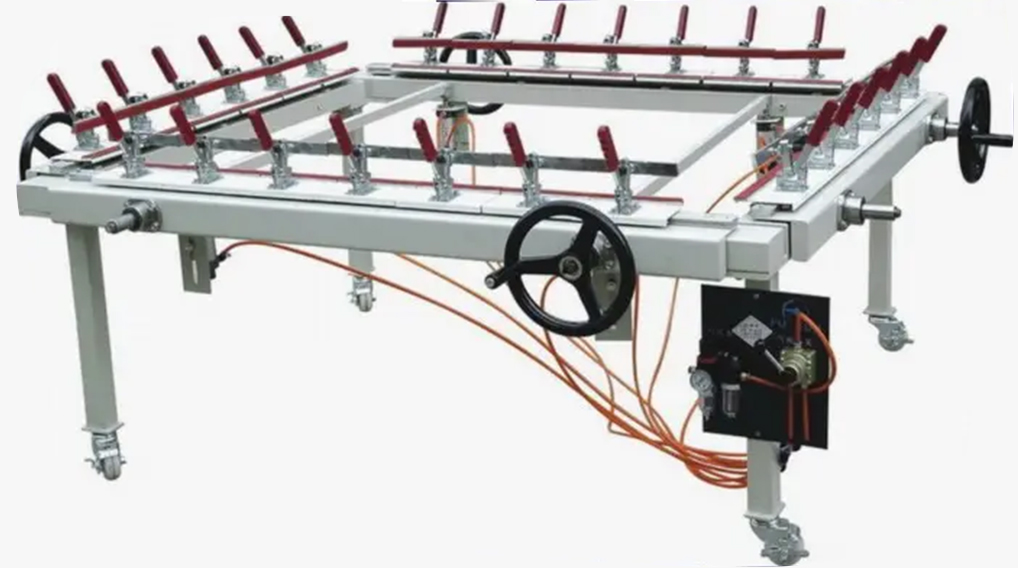
Stretching the screen is an essential process for making screen printing plates. Stretching the mesh is to firmly fix the mesh on the mesh frame under a certain tension. And make the stretched screen have a certain tension to meet the requirements of photosensitive agent coating and other plate making. The size of the screen tension and the quality of the stretched screen are directly related to the quality of the screen printing plate, and also have a direct impact on the printing quality. When printing in color, it is required that the tension of each color version of the screen printing plate for color registration must be basically the same, so as to ensure accurate registration. Only when the net is stretched can the quality of plate making and printing be guaranteed. There are two main methods of stretching the net, manual stretching and mechanical stretching. Hand-stretching is an easy, traditional method. Usually suitable for wooden mesh frame. This method is to fix the wire mesh on the wooden frame manually with nails, wooden strips, adhesives and other materials. The tension of manual stretching can generally meet the requirements, but the tension is not uniform, the operation is troublesome and time-consuming, and the quality of stretching is not easy to guarantee. This method is mostly used in occasions where a small amount of printing and printing accuracy are not required.
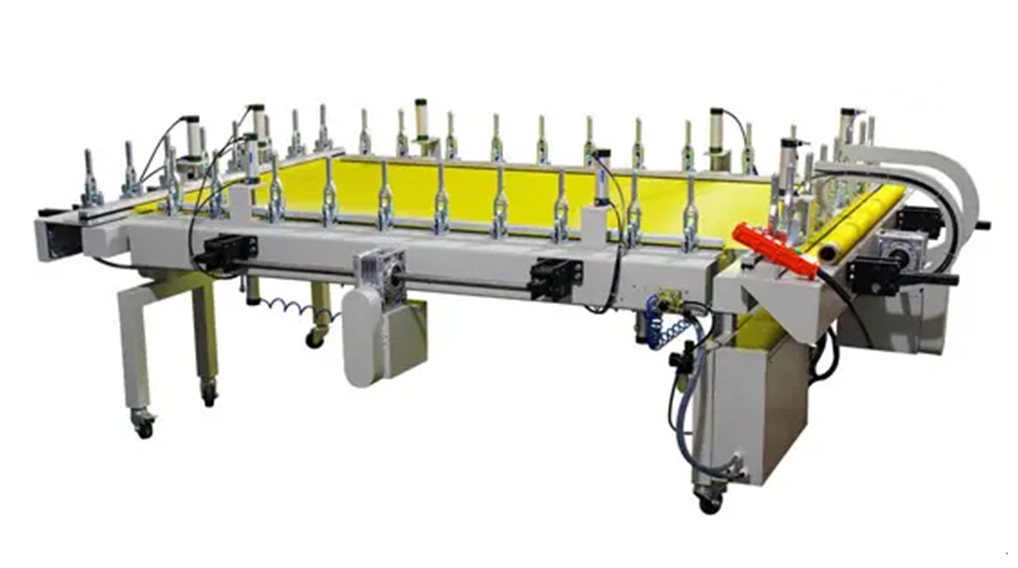
Mechanical tensioning is the use of mechanical force to tighten the mesh and firmly bond it to the mesh frame with an adhesive. After the adhesive is dry, remove the screen frame and seal the edges with polyester film single-sided pressure-sensitive tape. To prevent the adhesive from dissolving and give the screen printing plate a neat appearance. Frames of various materials can be mechanically stretched. Mechanical stretching has the characteristics of uniform tension and short stretching time. It is easy to grasp the required tension. It is suitable for plate making with high precision requirements.
How to choose the stretching angle?
Stretching angle refers to the angle between the warp and weft (wire) of the screen and the edge of the screen frame. There are two types of stretch nets, one is positive stretch nets and the other is bias stretch nets. The two methods of stretching the net are described below.
The positive stretch mesh is that the warp and weft lines of the wire mesh are parallel and perpendicular to the four sides of the mesh frame respectively. That is, the warp and weft lines are at 90 degrees to the edge of the screen frame.
Bias stretch mesh means that the warp and weft lines of the wire mesh are at a certain angle to the four sides of the mesh frame. It adopts the form of positive stretching, which is more convenient to operate. Because the wire mesh can be fully utilized, the scraps of the wire mesh can be saved and the waste of the wire mesh can be reduced. However, in the process of color printing, using this form of stretch screen plate making is prone to moiré, so the color printing generally does not use positive stretch screen.
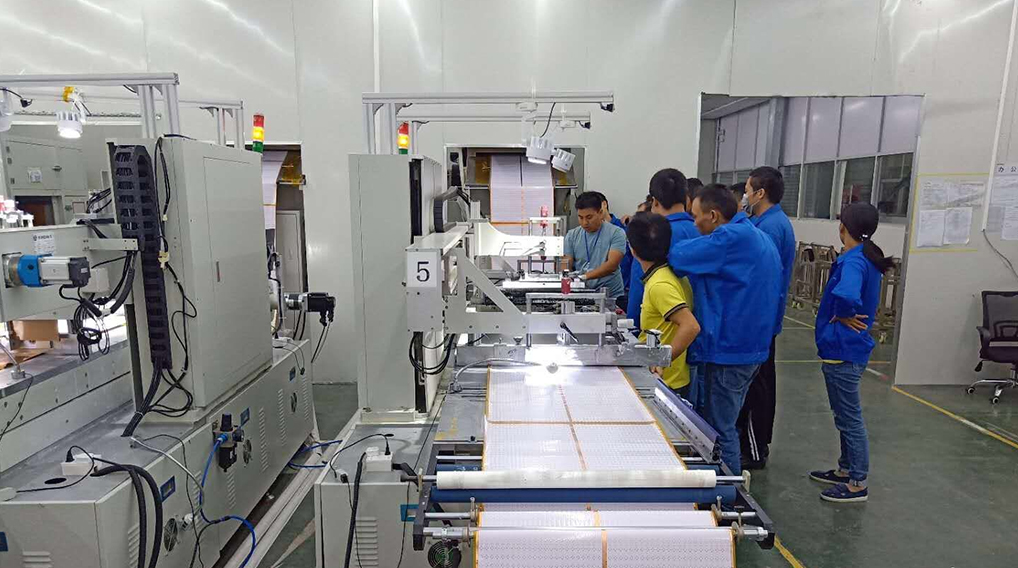
The use of diagonal stretch mesh is beneficial to improve the printing quality, and also has a certain effect on increasing the amount of ink leakage. The disadvantage is that the screen waste is large. In high-precision printing and color printing, the selection of the stretching angle has a direct impact on the printing quality. If the stretching angle is not suitable, moiré will appear. Therefore, for the printing of general replicas, the commonly used stretching angle is 20 degrees to 35 degrees. When printing high-resolution circuit boards, due to the high number of screen meshes used, the stretching angle is selected to be 45 degrees. Suitable. In the actual stretching of the screen, in order to reduce the waste of the screen, the normal stretch screen is generally used for duplicating the printed matter.
How to determine the tension of wire mesh stretch?
Screen printing accuracy is related to the accuracy of screen printing plates, and screen tension is one of the important factors affecting the quality of screen printing plates. The mesh tension is related to the material and strength of the mesh frame, the tree quality of the mesh, temperature, humidity, and the method of stretching the mesh. Usually in the case of manual stretching and no tension meter, the tension is mainly determined by experience. When stretching the wire mesh, stretch the wire mesh while pressing the wire mesh with your fingers. Just some flexibility.
When using a stretching machine and a large screen frame, a tension meter is generally used to test the tension of the wire mesh.
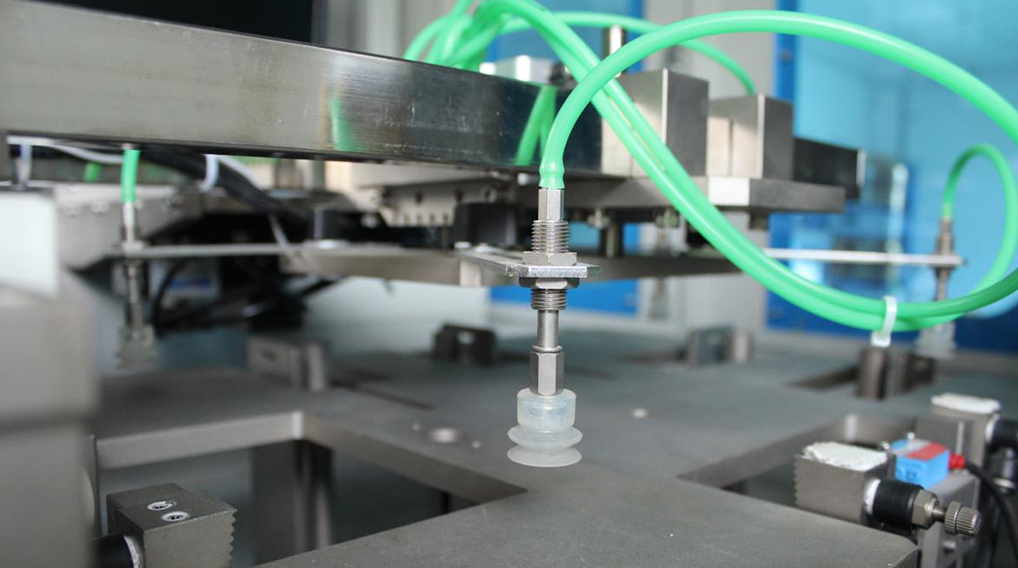
When using the mesh stretching machine to stretch the mesh, since the movement of the mesh tensioning chuck (elasticity adjustment) is controlled by the air pressure gauge, the air pressure values of the meshes of different textures are different. Usually the tension value of spun mesh is 7-9kg/cm2; the tension value of nylon mesh is 8--10 kg/cm2; the tension value of polyester mesh is 8--10 kg/cm2; stainless steel The air pressure value of the wire mesh is 10--13kg/cm2. The above are the air pressure reference values of several wire meshes when stretching the mesh. The mesh can be stretched according to the actual situation with reference to these data to obtain the ideal tension of the mesh.

VILITY is a Professional manufacturer, providing ONE-STOP SOLUTION for intelligent printing industry.

