Professional designer and manufacture of CCD machines for ONE STOP SOLUTION.
Language
Professional designer and manufacture of CCD machines for ONE STOP SOLUTION.
What material is the screen frame made of? What are the characteristics of these materials?
The materials used to make the screen frame mainly include wood, hollow aluminum profile, cast aluminum forming frame, steel and other materials. The most commonly used is the screen frame made of aluminum profiles. However, all kinds of screen frames have their own characteristics. When selecting, screen frames of different materials can be selected according to different situations, which will be introduced in turn.
The wooden mesh frame has the characteristics of simple production, light weight, convenient operation, low price, and simple method of stretching the mesh. This screen frame is suitable for hand printing. However, the screen frame of this wooden material has poor solvent resistance and water resistance, and is easily deformed after water immersion, which will affect the printing accuracy. This kind of screen frame was commonly used in the past, but it is rarely used now.
Hollow aluminum profile mesh frame and cast aluminum forming mesh frame have the characteristics of easy operation, high strength of the mesh frame, firmness and non-deformation, strong solvent and water resistance, and beautiful appearance.
Suitable for mechanical printing and manual printing.
The steel mesh frame has the characteristics of firmness, high strength, and good solvent and water resistance, but it has the disadvantages of being bulky and inconvenient to operate, so the scope of use is small.
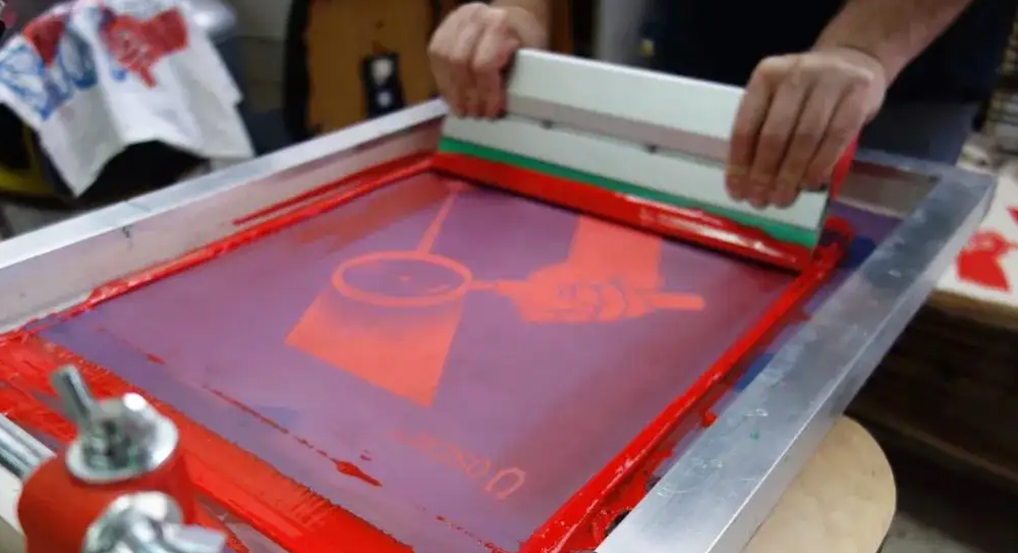
What are the conditions for choosing a frame?
Screen frame is one of the important materials for making screen printing plates. The selection of screen frame has a direct impact on the quality of plate making and printing quality. In order to ensure the requirements of plate making, printing quality and other aspects, the screen frame can be selected according to the following conditions.
① The screen frame must have a certain strength. Because when the mesh is stretched, the mesh produces a certain tension and pressure on the mesh frame. This requires the screen frame to withstand pressure without deformation, and to maintain the dimensional accuracy of the screen frame.
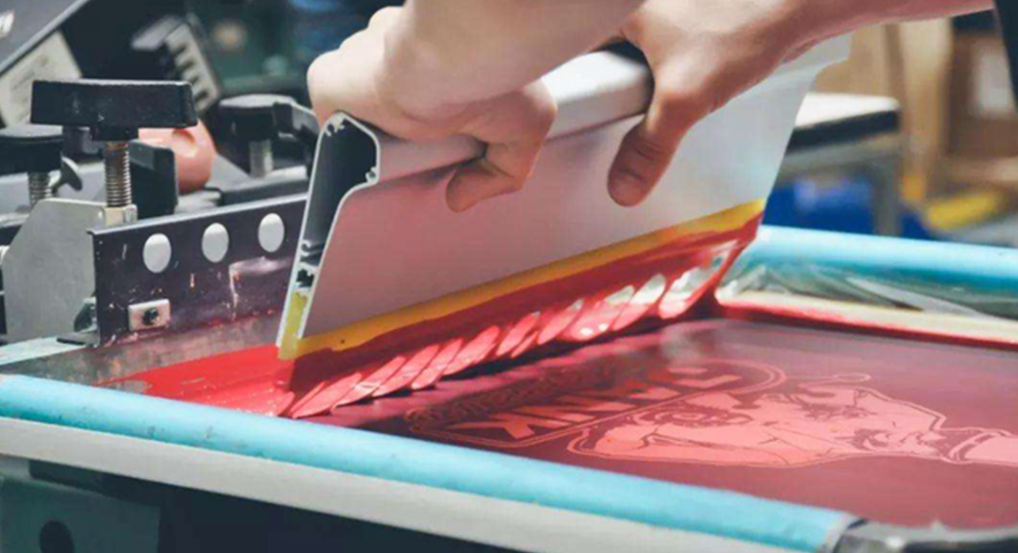
②Under the condition of ensuring the strength, the screen frame should be selected as light as possible, which is easy to operate and use.
③The bonding surface between the screen frame and the screen must have a certain roughness to strengthen the adhesion between the screen and the screen frame.
④ The sturdiness of the screen frame. The screen frame is often in contact with water, solvent, and affected by temperature changes during use, which requires the screen frame not to be skewed, so as to ensure the repeated use of the screen frame. This reduces waste and costs.
⑤ The screen frame of different specifications should be configured in the production, and the appropriate screen frame should be determined according to the size of the printing size, which can reduce waste and is easy to operate.
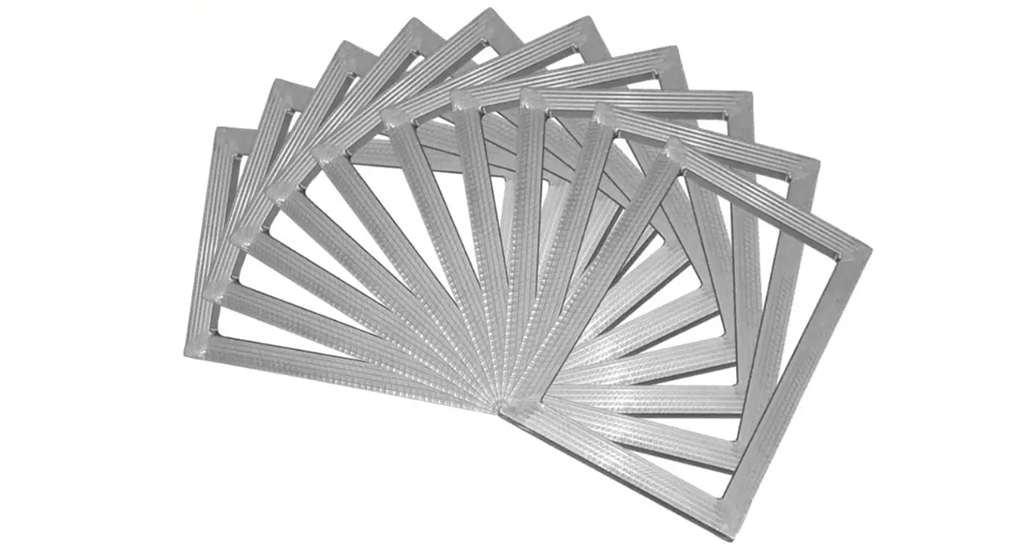
What are the main specifications of the aluminum mesh frame?
As can be seen from the foregoing, the wire mesh frame made of hollow aluminum profiles has the characteristics of light weight, stable size, beautiful appearance, and easy operation.
What are the physical performance indicators of common screen frame materials?
The most common screen frames used in screen printing are aluminum screen frames, followed by wooden screen frames and steel screen frames. The main physical performance indicators of these types of screen frames are as follows:
① Elasticity coefficient, the unit is Newton/cm. The elastic coefficient of wood material is 0.12×10⁷N/cm, the elastic coefficient of aluminum material is 0.75×10⁷N/cm, and the elastic coefficient of steel material is 2.1×10⁷N/cm Newtons/cm.
② Moment of inertia, expressed in units of centimeters to the fourth power. When the cross-sectional shape of the screen frame material is a hollow rectangle (the size of the outer frame is 5 × 4 cm and the wall thickness is 2.5 mm), the moment of inertia of the aluminum material and the moment of inertia of the steel material are 15.088 cm to the 4th power, and the cross-section of the wooden screen frame is When the shape is a solid rectangle (5 x 4 cm), the moment of inertia is 41.667 cm to the 4th power.
③ Density, expressed in grams per cubic centimeter. The density of wood is 0.9 g/cm3, the density of steel is 7.8 g/cm3, and the density of aluminum is 2.7 g/cm3.
④Coefficient of thermal expansion (10 to the fifth power/°C). The thermal expansion coefficient of aluminum material is 2.410 to the fifth power/°C, the thermal expansion coefficient of steel material is 1.2 to
the fifth power of 10/°C, and the thermal expansion coefficient of wood is 3.0 to the fifth power of 10/°C.

VILITY is a Professional manufacturer, providing ONE-STOP SOLUTION for intelligent printing industry.

