Professional designer and manufacture of CCD machines for ONE STOP SOLUTION.
Language
Professional designer and manufacture of CCD machines for ONE STOP SOLUTION.
Learn how to reduce misalignment errors in FPC punching processes using CCD vision positioning, intelligent automation, and Industry 4.0 manufacturing technologies. Discover how VILITY's high-precision punching solutions achieve positioning accuracy up to ±0.015 mm, improve production stability, reduce scrap rates, and increase yield for flexible printed circuit manufacturing through fully integrated automated production lines.
How to Reduce Misalignment Errors in FPC Punching Processes
Why Alignment Accuracy Is Critical in FPC Punching
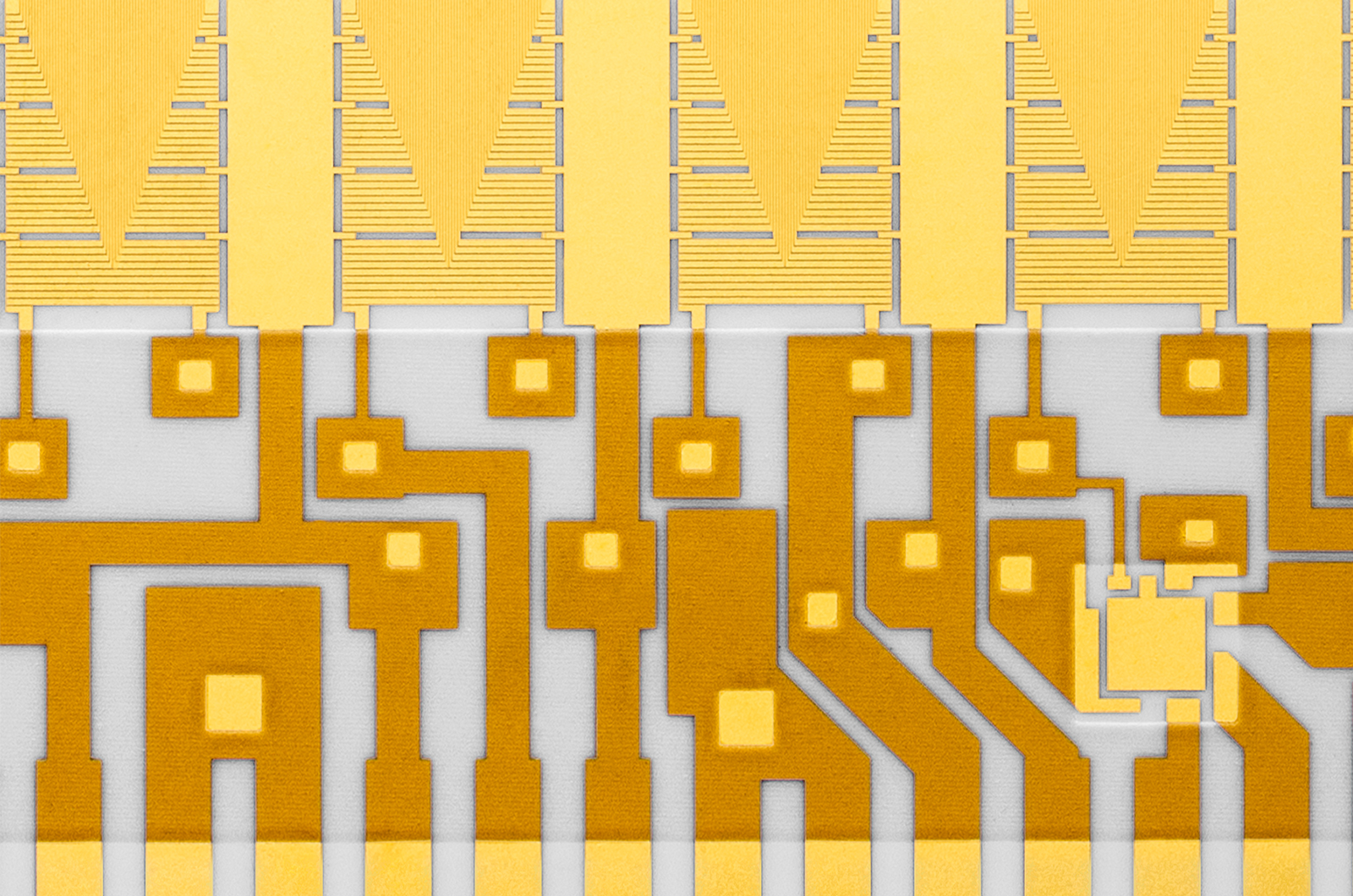
Flexible Printed Circuits (FPCs) have become essential components in industries such as consumer electronics, automotive electronics, medical devices, wearable technology, and industrial control systems. As electronic products become smaller and more sophisticated, the dimensional accuracy of FPCs becomes increasingly important.
Among all manufacturing processes, punching is one of the most critical. Even a slight misalignment between the punching position and the printed circuit pattern can result in defective products, assembly failures, or reduced electrical performance.
For manufacturers aiming to improve yield and reduce production costs, minimizing misalignment errors has become a key objective.
What Causes Misalignment Errors in FPC Punching?
Misalignment rarely results from a single factor. Instead, it is usually caused by the combined effects of material characteristics, equipment precision, and production processes.
1. Material Expansion and Shrinkage
Flexible materials such as PET and PI films are sensitive to temperature and humidity changes. During printing, drying, or storage, the material may expand or shrink, causing registration marks to shift before punching.
Without automatic compensation, these dimensional changes can lead to inaccurate hole positioning.
2. Manual Positioning Errors
Traditional punching equipment often relies on mechanical positioning or manual alignment.
Operator experience, visual judgment, and repetitive manual adjustments can introduce positioning errors that become more significant during high-volume production.
3. Printing Registration Deviation
If conductive patterns are not accurately registered during screen printing, even the most precise punching machine cannot produce perfectly aligned holes.
Maintaining high registration accuracy throughout the entire production process is therefore essential.
4. Equipment Accuracy Limitations
Many conventional punching machines operate with positioning accuracy around ±0.05 mm, which may no longer satisfy the precision requirements of modern FPC products.
As electronic devices continue to become smaller, manufacturers require much tighter tolerances.

How CCD Vision Technology Eliminates Misalignment
Modern FPC manufacturers increasingly use CCD vision positioning systems to replace traditional mechanical alignment methods.
CCD cameras automatically identify registration marks printed on the material and calculate the exact punching position before every production cycle.
Instead of relying on fixed mechanical positioning, the system dynamically compensates for material movement and dimensional variation.
This approach provides several advantages:
* Automatic positioning without manual adjustment
* Real-time deviation compensation
* Stable multi-point alignment
* Higher repeatability during continuous production
* Improved product consistency
VILITY CCD punching systems achieve positioning accuracy of up to ±0.015 mm, making them suitable for high-density FPC manufacturing.
Improve Material Stability Before Punching
Accurate punching begins long before the punching process itself.
Manufacturers should focus on controlling material stability throughout production by:
* Maintaining stable workshop temperature and humidity
* Using automatic web tension control
* Reducing material stretching during transportation
* Optimizing drying conditions
* Minimizing unnecessary material handling
Stable materials provide a reliable foundation for precise alignment and punching.
Integrate Printing and Punching into One Automated Workflow
Many alignment problems occur because printing and punching operate as separate production processes.
When printed materials are transferred manually between machines, positioning accuracy can easily be affected.
An integrated production line connects:
* Automatic loading
* CCD vision registration
* High-precision screen printing
* Drying systems
* Precision punching
* Automatic unloading
This synchronized workflow reduces handling errors while maintaining consistent registration throughout production.

Use Intelligent Process Monitoring
Modern smart factories continuously monitor production quality instead of relying only on final inspection.
Real-time monitoring systems can detect:
* Registration deviations
* Punch position errors
* Material movement
* Production abnormalities
* Equipment status
Operators receive immediate feedback, allowing corrective actions before defects affect large production batches.
Build an Industry 4.0 Smart Manufacturing Environment
Production stability improves significantly when punching equipment becomes part of a connected manufacturing system.
Industry 4.0 technologies enable manufacturers to collect production data, monitor equipment performance, and optimize manufacturing parameters automatically.
Benefits include:
* Better process traceability
* Predictive equipment maintenance
* Reduced machine downtime
* Consistent production quality
* Higher manufacturing efficiency
Digital manufacturing allows continuous improvement based on real production data.
Production Benefits of High-Precision CCD Punching
By combining CCD vision technology with intelligent automation, manufacturers can achieve measurable improvements in production performance.
Typical results include:
* Positioning accuracy up to ±0.015 mm
* Higher punching consistency
* Reduced scrap rates
* Improved first-pass yield
* Faster production speeds
* Lower labor costs
* Stable long-term production performance
These improvements help manufacturers remain competitive in today's demanding electronics industry.
How VILITY Supports High-Precision FPC Manufacturing
VILITY provides complete automation solutions designed specifically for high-precision FPC production.
Our integrated manufacturing systems include:
* CCD Vision Registration Systems
* High-Precision Punching Machines
* Automatic Screen Printing Systems
* Roll-to-Roll Manufacturing Equipment
* Automatic Feeding Systems
* Intelligent Material Handling
* Industry 4.0 Production Line Integration
Rather than supplying standalone equipment, VILITY delivers complete manufacturing solutions that improve accuracy, productivity, and overall production stability.
Conclusion
Reducing misalignment errors in FPC punching requires more than improving punching accuracy alone. Manufacturers must optimize every stage of production, including material handling, printing registration, vision positioning, and intelligent process control.
With advanced CCD vision technology and fully integrated automation solutions, manufacturers can significantly improve punching accuracy, reduce waste, and achieve consistent high-quality production.
As the demand for precision electronics continues to grow, investing in intelligent punching technology is becoming an essential step toward building a more efficient and competitive manufacturing operation.
FAQ
What causes misalignment errors in FPC punching?
Misalignment is typically caused by material expansion or shrinkage, manual positioning errors, printing registration deviations, equipment accuracy limitations, and unstable production processes.
How does CCD vision improve punching accuracy?
CCD vision systems automatically detect registration marks and calculate the correct punching position in real time. This eliminates manual positioning errors and compensates for material movement, ensuring highly accurate and consistent punching.
What positioning accuracy can VILITY CCD punching systems achieve?
VILITY CCD punching machines can achieve positioning accuracy of up to ±0.015 mm, making them ideal for high-precision FPC and flexible electronics manufacturing.
Why is punching accuracy important in FPC manufacturing?
Accurate punching ensures proper alignment between circuit patterns and assembly holes, improving product reliability, reducing scrap rates, and preventing downstream assembly issues.
Can CCD punching systems improve production efficiency?
Yes. Automated CCD punching systems reduce manual adjustments, improve production consistency, increase first-pass yield, and support high-speed continuous manufacturing.
Which industries benefit from high-precision FPC punching technology?
High-precision FPC punching is widely used in automotive electronics, consumer electronics, medical devices, wearable electronics, industrial control systems, communication equipment, and flexible electronic products.
CONSULT OUR CUSTOMERS FOR SURPRISE DISCOUNTS
Please provide us with the information below to complete your request. Just leave your email or phone number in the contact form so we can send you a free quote for our wide range of designs!

VILITY is a Professional manufacturer, providing ONE-STOP SOLUTION for intelligent printing industry.

